My story
My Science Olympiad Journey
Scroll the full timeline. The chapter you are on lights up as you move through the story.
-
Science Olympiad has been a pretty big part of my life for the past few years, but it honestly started in a really random way. I didn't grow up knowing what Science Olympiad was or having some huge plan to compete in it. I first heard about it at school and wanted to learn more, but there wasn't a whole lot of information available. My mom ended up emailing the school multiple times just trying to figure out what the team was, how tryouts worked, and how I could even get involved. Eventually, we got more information, and I was able to actually try out. From there, I started studying, preparing, and figuring out what Science Olympiad was all about. I made the team, and that was really the beginning of everything.
-
My first year of Science Olympiad was when everything started to click. I was still figuring out how competitive Science Olympiad could be, but I loved the idea that there were so many completely different events to learn. You could be memorizing science, solving problems, building something, or working with a partner on a challenge. It wasn't just about being good at one subject.
That first season also gave me some of my first real Science Olympiad medals. I earned 1st place in Codebusters, 1st place in Bridge, and 3rd place in Road Scholar. Getting those medals was obviously exciting, but more importantly, it made me realize that I could actually become good at this. I started taking the events much more seriously and wanted to keep improving rather than just showing up to competitions.
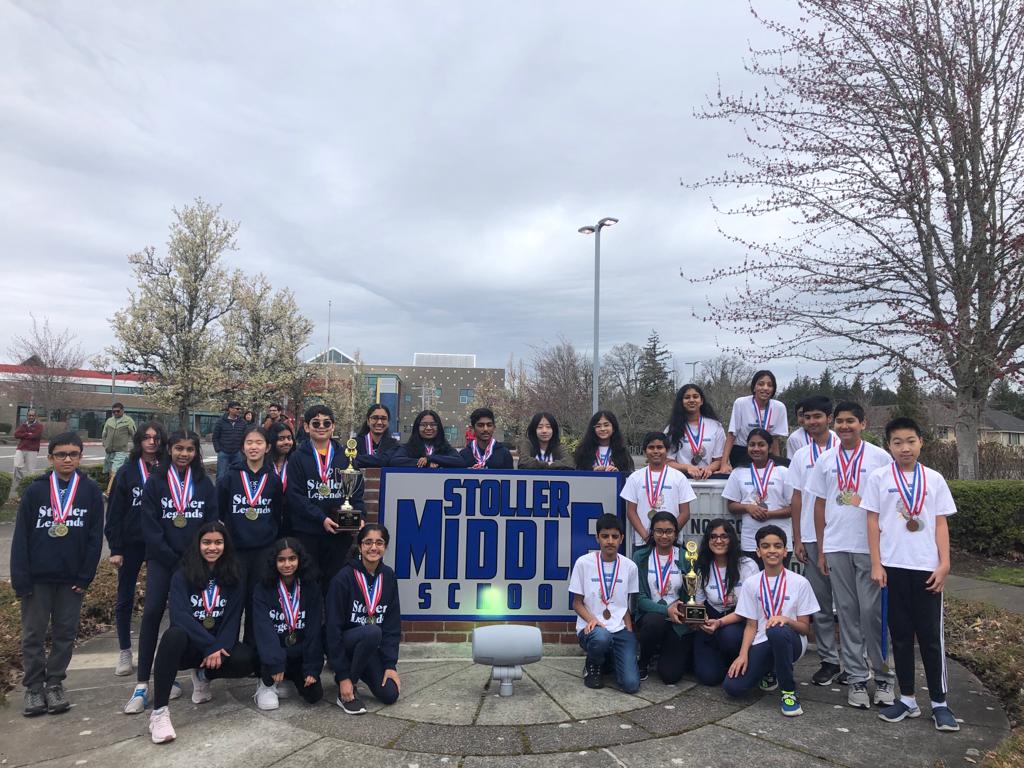
Stoller Middle School SciOly team -
Bridge was probably the most insane part of my early Science Olympiad experience.
On paper, the event seemed pretty simple: build a bridge that could hold as much weight as possible while keeping the structure as light as possible. In reality, it was anything but simple. We went through somewhere around 12 to 15 different prototypes, constantly changing the design, rebuilding pieces, testing them, and figuring out what went wrong.
We were always trying to find that perfect balance: how do we make this thing lighter without sacrificing strength? Sometimes we'd make a design that looked amazing and then it would completely fail when we tested it. Other times, we'd make something that held a lot of weight but was way too heavy. Every failed prototype meant going back to the drawing board.
There were definitely nights where we stayed up way later than we probably should have trying to get the design right. But that's also what made the event so memorable. It wasn't just about building a bridge. We were constantly experimenting, making mistakes, learning from those mistakes, and trying again. I learned how much small design decisions can matter, how important testing is, and honestly, how much persistence matters when something just isn't working.
Bridge was one of the first times I really experienced what it feels like to work on something where there isn't an obvious answer. You can't just study the right information and know that you'll succeed. You have to build something, watch it fail, figure out why, change it, and try again. That mindset ended up sticking with me far beyond that one event.
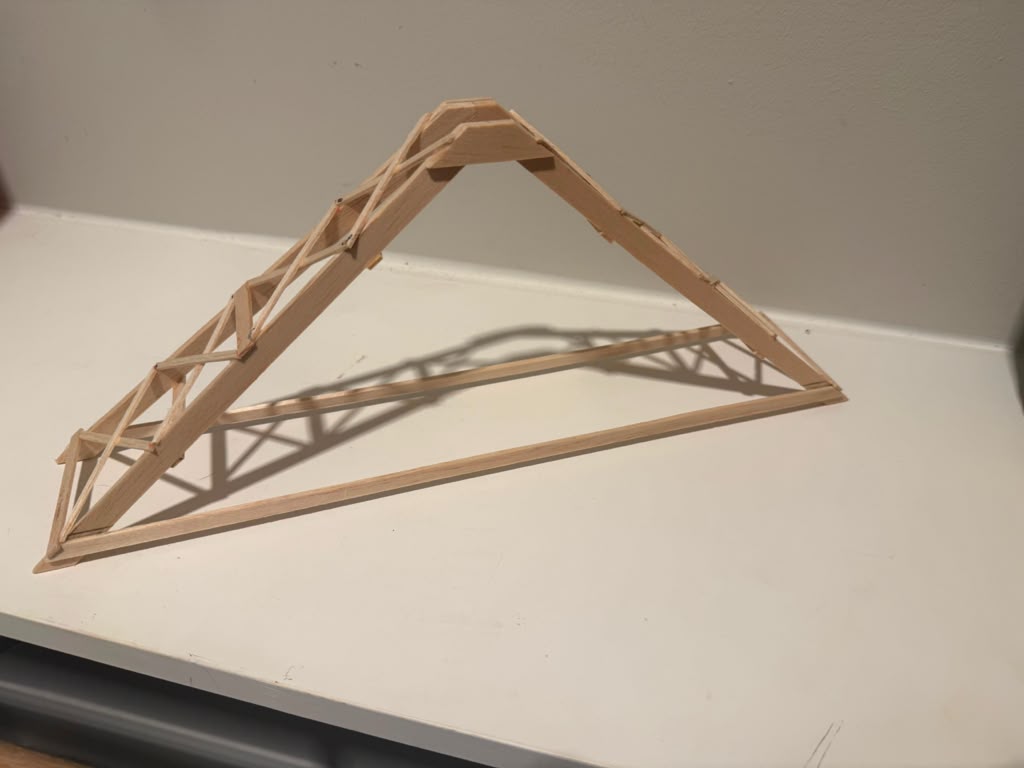
Final Bridge that held all 15KG at State Competition and won 1st Place -
Then I moved to North Carolina, and Science Olympiad suddenly became a completely different experience.
I joined Davis Drive Middle School's varsity Science Olympiad team, which meant starting over in a lot of ways. I was meeting completely new people, learning how a new team operated, and trying to find my place in a new environment. Moving itself was already a huge change, so having something familiar like Science Olympiad was really important to me.
Even though everything around me had changed, Science Olympiad gave me something I already understood and cared about. I could walk into a new team and immediately have something to work toward, people to work with, and competitions to look forward to. I met some of my closest teammates through the team, and I think that's one of the things I value most about Science Olympiad. It isn't just the science or the medals. It's the people you spend hours studying, building, testing, and competing with.
My time at Davis Drive also helped me become much more comfortable competing at a higher level. I was no longer just figuring out what Science Olympiad was. I was becoming someone who could take an event seriously, prepare independently, work with teammates, and contribute to a varsity team.
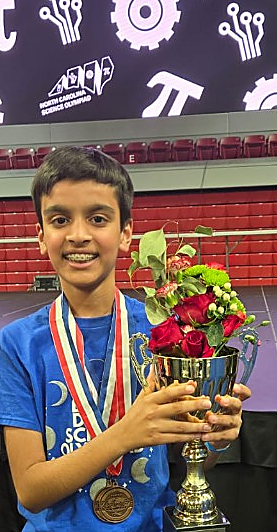
NC Science Olympiad State Tournament -
When I got to high school, there wasn't a Science Olympiad team at my school during 9th grade, so I didn't compete that year.
At first, it was definitely weird to go from being so involved in Science Olympiad to suddenly not having it as part of my life. But that year also made me realize how much I actually missed it. By the time I got to 10th grade, I didn't really want to just wait around for someone else to bring Science Olympiad back. I wanted to do something about it.
-
In 10th grade, I helped cofound/rebuild the Science Olympiad club at my high school and eventually became a captain of the team.
This was probably one of the biggest transitions in my Science Olympiad journey. Before this, I was mainly focused on being a competitor. Now I had to think about the entire team.
We had new advisors who were still learning how Science Olympiad worked, so a lot of the responsibility naturally ended up falling on the students. We had to figure out how we were going to prepare for competitions, what events people would compete in, how to organize meetings, what we needed to study, and how to keep everyone on track.
I ended up doing a lot of things behind the scenes that I had never really thought about before. I helped lead meets and presentations, organized study events and after-school meetings, helped students prepare for their events, and worked on planning the logistics for competitions. There was a lot more planning than I expected. You couldn't just know your own events anymore. You had to think about what the entire team needed.
Being a captain also changed how I thought about leadership. I realized pretty quickly that being a good captain isn't just about being the person who knows the most. A huge part of it is making sure other people have the resources, support, and direction they need to succeed. Sometimes that meant teaching an event. Sometimes it meant helping someone figure out what to study. Sometimes it was just making sure things were organized enough that everyone could actually focus on competing.
It was definitely a lot of work, especially because we were essentially building the structure of the team as we went. But seeing the team come together made it worth it. We were creating something that hadn't existed at the school before, and I got to be part of making that happen.
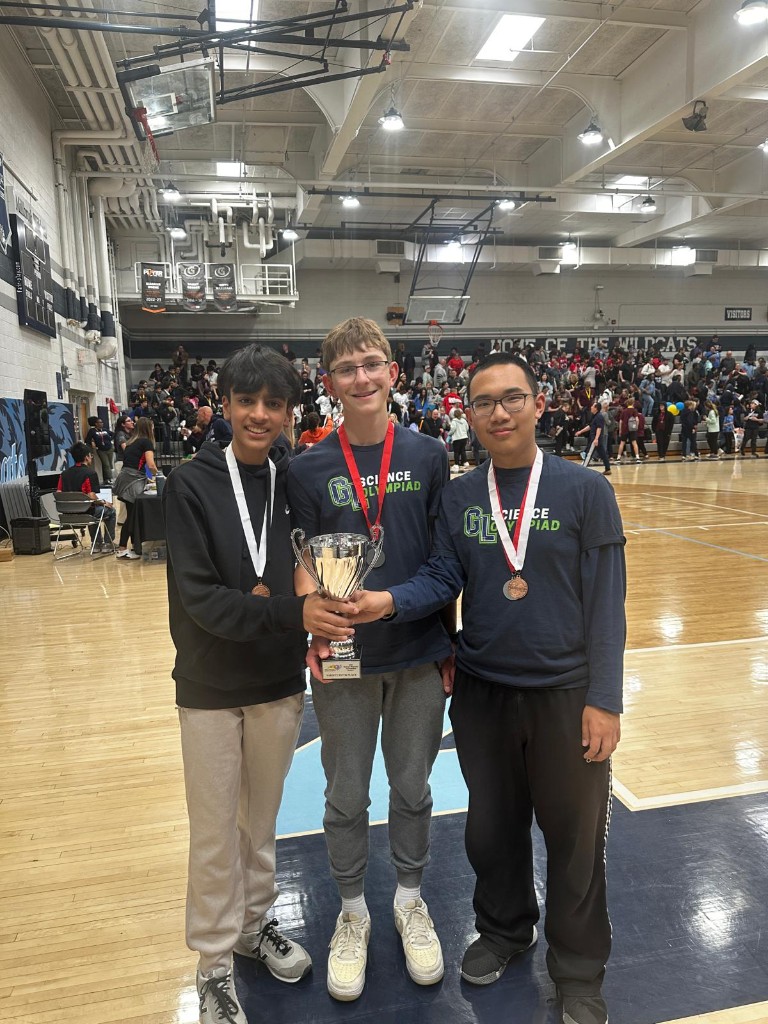
10th grade, captains -
After spending years learning Science Olympiad for myself, I started realizing that I wanted to help other students experience the same thing.
That's where SciOly Tutor came from.
I had spent so much time learning events, figuring out how to study, making mistakes, preparing for competitions, and eventually helping my own teammates that I started thinking about how much easier it could be for someone who was just starting out if they had good resources from the beginning.
So I started building SciOly Tutor as a place where students could find explanations, study resources, strategies, and eventually videos that actually help them prepare for Science Olympiad. I've also had the opportunity to teach Science Olympiad workshops to 100+ middle school students, which has been one of the most rewarding parts of this whole journey.
The goal isn't just to tell students what to memorize. I want to explain the way I wish someone had explained things to me when I first started: what actually matters, how to prepare for competitions, how to approach difficult events, and how to keep improving when you don't get things right the first time.